
If you’ve been searching for whether suboxone helps with alcohol cravings, here’s the direct answer: no, suboxone is not approved to treat alcohol use disorder, and it isn’t the right medication for alcohol cravings or alcohol withdrawal. Suboxone is built for opioid addiction, and it works through a completely different mechanism than what actually helps someone stop drinking. That mix-up is more common than you’d think, especially for anyone dealing with both a drinking problem and an opioid problem at the same time, or anyone who’s heard the name suboxone tossed around in recovery circles without knowing exactly what it does.
This isn’t a small detail. Understanding what suboxone actually treats, and knowing which medications are genuinely approved for alcohol use disorder, can be the difference between wasting months on the wrong approach and getting real traction toward sobriety. Let’s walk through what suboxone is, why the confusion exists, what happens when alcohol and opioid medications mix, and what treatment for alcohol addiction actually looks like when it’s done right.
What Suboxone Actually Is and What It’s Approved to Treat
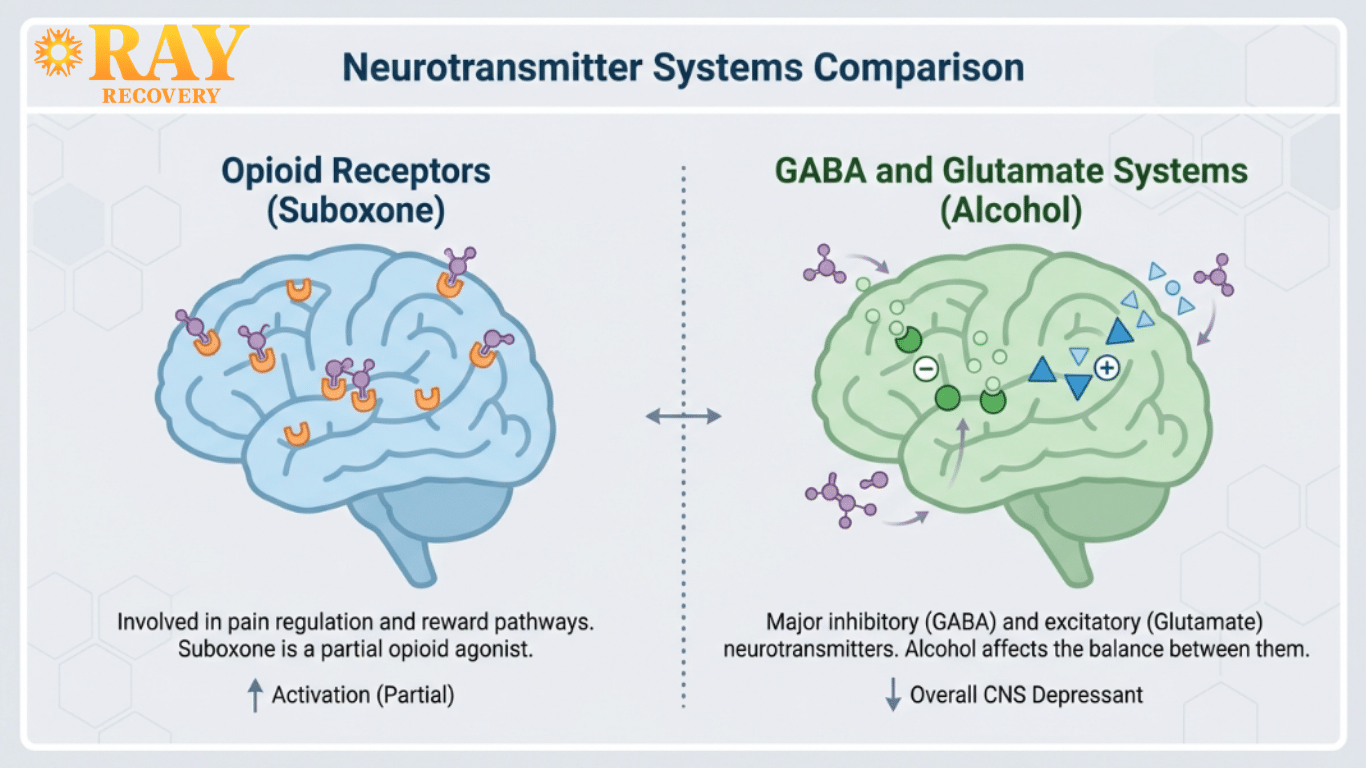
Suboxone is a combination medication made of buprenorphine and naloxone. Buprenorphine is a partial opioid agonist, meaning it activates opioid receptors in the brain just enough to prevent withdrawal and reduce cravings, without producing the same intense high as substances like heroin or fentanyl. Naloxone is added to discourage misuse by injection. Together, they’re FDA-approved specifically for opioid use disorder, not alcohol use disorder.
Suboxone works because opioid addiction and alcohol addiction affect the brain through different pathways. Opioids act directly on opioid receptors, which is exactly where buprenorphine steps in to occupy those same receptors and ease withdrawal. Alcohol, on the other hand, primarily affects GABA and glutamate systems in the brain, which is a different chemical process entirely. That’s the core reason suboxone isn’t built to touch alcohol cravings the way it touches opioid cravings. It’s simply targeting the wrong system.
If you or someone you love has been managing opioid use disorder with medication-assisted treatment like suboxone and is now also struggling with drinking, that’s a genuinely common situation, and it deserves its own conversation with a treatment provider rather than an assumption that one medication will quietly cover both.
Why People Ask If Suboxone Helps With Alcohol Cravings
The confusion usually comes from one of a few places. Some people hear that suboxone reduces cravings in general and assume that applies across the board to any substance. Others are already prescribed suboxone for opioid use disorder and start drinking again, then wonder if the medication already in their system is offering some kind of protection. And a smaller number of people have come across anecdotal reports online claiming that buprenorphine took the edge off their drinking, which isn’t the same thing as clinical evidence or FDA approval.
It’s worth being clear here. Even if a person notices some subjective change in how alcohol affects them while on suboxone, that isn’t the same as suboxone being a treatment for alcohol use disorder. Anecdote isn’t a substitute for an approved, studied medication built for the specific problem you’re facing. If drinking has become part of the picture, that needs its own honest evaluation, ideally through dual diagnosis care that looks at the full picture rather than just the opioid side of things.
Is It Safe to Combine Suboxone and Alcohol?
This is the part that matters most from a safety standpoint. Suboxone and alcohol are both central nervous system depressants, and combining central nervous system depressants carries real risk, including slowed breathing, extreme drowsiness, impaired coordination, and in more serious cases, dangerous respiratory depression. This is a well-documented interaction, not a maybe.

If you’re currently prescribed suboxone and also drinking, or thinking about drinking, the responsible next step is an honest conversation with your prescribing physician or your treatment team, not guesswork. Providers who prescribe suboxone need to know about any alcohol use so they can adjust care appropriately and watch for warning signs. This is exactly the kind of situation where dual diagnosis treatment becomes essential, because managing two substances at once requires a coordinated plan, not two separate providers working from incomplete information.
What Medications Are Actually Approved for Alcohol Use Disorder
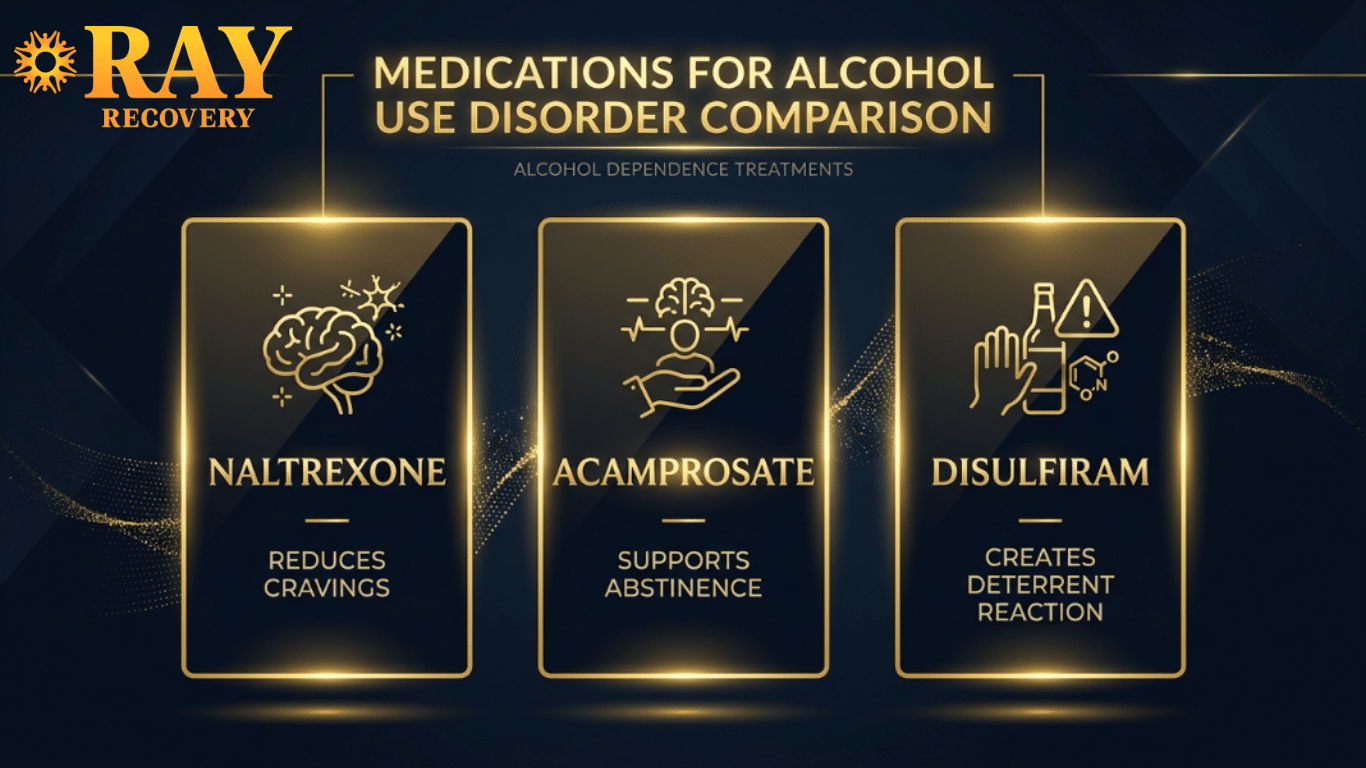
If suboxone isn’t the answer, the good news is that there are genuine, FDA-approved medications built specifically for alcohol use disorder. Here’s what they are and how each one works.
Naltrexone (Including Vivitrol)
Naltrexone is an opioid receptor antagonist, meaning it blocks opioid receptors rather than activating them. For alcohol use disorder specifically, it works by reducing the rewarding, reinforcing feeling that comes from drinking, which in turn reduces cravings and helps people cut down on heavy drinking episodes. It’s available as a daily pill or as Vivitrol, a long-acting monthly injection that removes the burden of remembering a daily dose. Naltrexone is generally considered a first-line treatment option for alcohol use disorder. If you want a deeper look at how the injectable version works, we cover it in our post on understanding Vivitrol.
Acamprosate
Acamprosate, sold under the brand name Campral, is approved specifically to help people maintain abstinence after they’ve already stopped drinking. It doesn’t treat active withdrawal and it isn’t meant for someone who’s still actively drinking heavily. Instead, it helps stabilize brain chemistry that was thrown off balance by long-term alcohol use, and it’s often recommended for people who drink to cope with stress or difficult emotions.
Disulfiram
Disulfiram, known by the brand name Antabuse, works completely differently from the other two. Instead of reducing cravings, it creates an unpleasant physical reaction, including nausea, flushing, and headache, if someone drinks alcohol while taking it. That reaction acts as a deterrent. Disulfiram tends to work best for people who are highly motivated to stop drinking and want an added layer of accountability, though it does require real commitment since the medication itself won’t stop someone from drinking, it just makes drinking a very unpleasant experience.
Off-Label Options
A few other medications, including topiramate and gabapentin, are sometimes used off-label for alcohol use disorder when the three FDA-approved options aren’t the right fit for a particular person. These aren’t specifically approved for AUD, but there’s a reasonable body of research behind their use in certain cases, and a qualified provider can help determine if one makes sense for your situation.
None of these medications work in isolation. They’re most effective as part of a broader treatment plan that includes therapy, structure, and support, which is where a real outpatient program comes in.
What If You’re Dealing With Both Opioid and Alcohol Addiction at Once
Plenty of people searching for whether suboxone treats alcohol addiction are asking because they’re managing both substances, not just one. This is more common than most people realize, and it’s not something to feel ashamed of or try to untangle alone.
Treating both conditions well usually means addressing them together rather than in isolation. A provider might keep someone on suboxone for the opioid side while separately introducing naltrexone or another approved medication for the alcohol side, always under close medical supervision given the interaction risks discussed above. This is precisely what dual diagnosis and integrated addiction care are designed for, treating the whole person rather than picking one substance to focus on while the other quietly continues in the background.
What Real Treatment for Alcohol Use Disorder Looks Like
Medication is one piece of the picture, but lasting recovery from alcohol use disorder almost always involves more than a prescription. A well-built outpatient program combines the right medication, when appropriate, with therapy that addresses the reasons someone started drinking in the first place.
Our alcohol rehab program is built around this exact approach. Depending on where someone is in their recovery, that might mean starting with a more structured level of care like our Partial Hospitalization Program, which offers several hours of daily support, or stepping into our Intensive Outpatient Program for a schedule that fits around work and family life. Therapy is a core part of this process too, since medication alone rarely addresses the underlying patterns that led to heavy drinking in the first place.

Recovery from alcohol use disorder isn’t about finding one magic medication and calling it done. It’s about building a plan that actually fits the person, which is exactly why an honest conversation with a treatment provider matters so much more than a forum post or a well-meaning guess.
Getting Help in Northeast Ohio
If you’re in the Akron area and trying to sort out what actually works for alcohol use disorder, whether or not opioids are also part of the picture, Ray Recovery’s team can walk you through your options without judgment. Our main facility is based in Hudson, serving Akron and the surrounding Summit County communities, with a second location in Uniontown for clients closer to Stark County. Our team can help you understand whether naltrexone, acamprosate, disulfiram, or a non-medication approach makes the most sense for your specific situation, and we’ll walk you through exactly what your insurance covers before you commit to anything.
Frequently Asked Questions
Does suboxone help with alcohol cravings?
No. Suboxone is FDA-approved for opioid use disorder, not alcohol use disorder. It works on opioid receptors, which is a different system than the one alcohol primarily affects in the brain. If alcohol cravings are the concern, naltrexone is the medication with the strongest evidence and FDA approval for that specific purpose.
Can you take suboxone and drink alcohol at the same time?
This carries real risk. Both suboxone and alcohol are central nervous system depressants, and combining them can lead to extreme drowsiness, impaired coordination, and dangerous respiratory depression. Anyone prescribed suboxone who is also drinking should talk to their prescribing provider directly rather than making that decision alone.
Is suboxone used for alcohol withdrawal?
No. Suboxone is not approved or typically used for alcohol withdrawal, which has its own set of medically supervised protocols. Alcohol withdrawal can be medically serious and should always be managed under professional supervision, separate from any opioid medication a person might already be taking.
What is the difference between suboxone and Vivitrol?
Suboxone contains buprenorphine, a partial opioid agonist used for opioid use disorder. Vivitrol is a long-acting injectable form of naltrexone, an opioid receptor antagonist that’s approved for both opioid use disorder and alcohol use disorder. They work through different mechanisms and are approved for different, though sometimes overlapping, purposes.
What medications actually treat alcohol use disorder?
The three FDA-approved medications for alcohol use disorder are naltrexone, acamprosate, and disulfiram. Each works differently, from reducing the rewarding effects of drinking to creating an unpleasant reaction if alcohol is consumed, and a provider can help determine which fits a person’s specific situation and history.
Can someone be treated for both opioid and alcohol addiction at the same time?
Yes. This is a common situation, and it’s best managed through coordinated, dual diagnosis care rather than treating one substance while ignoring the other. A treatment team can combine the right medications and therapy to address both conditions safely and simultaneously.
The Bottom Line
Suboxone has an important, well-established role in opioid use disorder treatment, but it isn’t built to treat alcohol addiction, and relying on it for that purpose can leave the real problem unaddressed while introducing genuine safety risks if alcohol is added into the mix. If drinking has become part of your story, whether alongside opioid use or on its own, there are medications built specifically for that condition, and there are treatment programs built to bring medication, therapy, and real structure together.
You don’t have to sort out which medication does what on your own. A conversation with the right provider can clarify all of this quickly, and it’s a conversation worth having sooner rather than later.