
If you’ve been in recovery for a while and still find yourself circling back to the same cravings, the same triggers, the same moments that seem to come out of nowhere, there’s a good chance something underneath the addiction hasn’t actually been resolved. For a lot of people, that something is trauma. EMDR therapy was built specifically to work with the brain’s way of storing traumatic memories, and it’s becoming one of the more effective tools available for treating addiction that’s rooted in something deeper than habit.
At Ray Recovery, we use EMDR therapy as part of our broader approach to addiction and trauma treatment in Ohio. This guide walks through what EMDR actually is, how it works, what the process looks like session to session, and how to know if it might be the right fit for you or someone you love.
What Is EMDR Therapy?
EMDR stands for Eye Movement Desensitization and Reprocessing. It’s a structured form of psychotherapy developed in the late 1980s by psychologist Francine Shapiro, originally to treat post-traumatic stress disorder. Since then, it’s expanded well beyond PTSD and is now widely used for addiction, anxiety, depression, and other conditions where past trauma keeps showing up in present-day symptoms.
The theory behind EMDR is called the Adaptive Information Processing model. The basic idea is that when someone experiences something traumatic, the brain sometimes fails to fully process that memory the way it processes everyday experiences. Instead of getting filed away and integrated normally, the memory stays “stuck,” still carrying the original emotional charge, the fear, shame, or panic, even years later. That’s why a smell, a sound, or a passing comment can suddenly trigger someone right back into how they felt during the original event.
EMDR is built to help the brain finish that unfinished processing. Rather than talking through a memory in detail the way traditional talk therapy does, EMDR uses bilateral stimulation, usually guided eye movements, though tapping or alternating sounds work too, while the person holds the memory in mind. That back-and-forth stimulation appears to help the brain reprocess the memory so it stops carrying the same intensity.

How Does EMDR Work for Addiction Specifically?
Addiction and trauma are connected far more often than people expect. A lot of substance use starts, or gets worse, as a way of managing pain that never got properly addressed, whether that’s childhood trauma, combat exposure, abuse, grief, or something else entirely. When that underlying pain doesn’t get treated, standard addiction treatment can help someone get sober, but it doesn’t always address why the substance became necessary in the first place. That gap is often where relapse comes from.
EMDR works on that gap directly. By reprocessing the traumatic memories fueling substance use, the goal isn’t just symptom relief, it’s reducing the actual emotional pull that makes someone reach for a substance in a moment of distress. Research on EMDR and substance use disorder has shown it can meaningfully reduce cravings, particularly in people whose addiction is closely tied to unresolved trauma or PTSD. It’s most effective when combined with other evidence-based approaches like cognitive behavioral therapy and ongoing dual diagnosis treatment, rather than as a standalone fix.
The 8 Phases of EMDR Therapy
EMDR follows a structured, eight-phase process. Every course of treatment moves through these phases, whether the focus is trauma, addiction, or both together.
Phase 1: History Taking and Treatment Planning. Your therapist gathers a full picture of your history, trauma, substance use, current symptoms, and goals, and together you identify which memories or experiences will actually become the focus of treatment.
Phase 2: Preparation. Before any memory processing starts, your therapist explains exactly what EMDR involves and teaches grounding and self-regulation skills you can use both during sessions and if difficult emotions come up outside of them.
Phase 3: Assessment. You and your therapist identify a specific memory to target, along with the images, thoughts, emotions, and physical sensations connected to it. You’ll typically rate how distressing that memory feels using a simple 0-to-10 scale, so progress can be tracked session over session.
Phase 4: Desensitization. This is the core of the work. Using guided eye movements or another form of bilateral stimulation, you focus on the memory while your therapist guides you through sets of stimulation, tracking how your distress level shifts as the memory gets reprocessed.
Phase 5: Installation. Once the original memory carries less charge, this phase focuses on strengthening a more positive belief in its place, replacing something like “I couldn’t stop it” with something like “I survived it and I’m safe now.”
Phase 6: Body Scan. Trauma doesn’t just live in thoughts, it often shows up physically. This phase checks for any lingering tension or physical sensation connected to the memory and works to resolve that too.
Phase 7: Closure. Every session ends with closure, even if the memory hasn’t been fully processed yet. Your therapist reviews coping strategies and may ask you to note anything that comes up between sessions.
Phase 8: Reevaluation. At the start of each new session, your therapist checks in on how things have gone since the last one, reviews progress, and decides what to target next.
Most people go through 6 to 12 sessions, though the actual number depends on how complex someone’s history is and how they respond along the way. EMDR is generally well tolerated, though it’s normal to feel some emotional intensity during a session since the whole point is reprocessing material that’s been sitting untouched, sometimes for years.
Benefits of EMDR for Addiction Recovery
When EMDR is integrated properly into addiction treatment, people tend to notice a few consistent things:
- Reduced cravings. Addressing the trauma underneath substance use often lessens the emotional pull that drives cravings in the first place.
- Better emotional regulation. Clients frequently report fewer mood swings and less reactivity to everyday stress after processing the memories driving that reactivity.
- Lower relapse risk. Since EMDR targets the root cause rather than just the behavior, it can reduce the chance of falling back into old patterns when life gets hard.
- Faster progress on trauma specifically. Compared to some forms of traditional talk therapy, EMDR often produces meaningful relief in fewer sessions, since it doesn’t require repeatedly narrating the traumatic event in detail.
- A path forward without reliving everything out loud. For people who find it genuinely difficult to talk about what happened to them, EMDR offers a way to process trauma that doesn’t depend on verbally recounting every detail.
Is EMDR Right for You?
EMDR tends to be a strong fit if:
- You’ve noticed that certain triggers, memories, or emotional states consistently precede cravings or relapse
- You have a trauma history, whether that’s a single event or something ongoing, that feels connected to your substance use
- You’ve tried other forms of therapy and feel like something underneath the addiction still hasn’t been addressed
- You’re currently in a stable enough place in recovery to safely process difficult material, generally after initial stabilization rather than during acute crisis
EMDR isn’t the right starting point for everyone. People in active psychosis, severe current substance use, or acute crisis usually need stabilization first before trauma reprocessing work can be done safely. Our clinical team assesses this directly during intake so EMDR gets introduced at the right point in your treatment, not before you’re ready for it.
What to Expect From EMDR at Ray Recovery
At Ray Recovery, EMDR is offered as part of a broader, individualized treatment plan, not a one-off session disconnected from everything else. Depending on your level of care, whether that’s our partial hospitalization program or intensive outpatient program, EMDR sessions are woven into your overall care alongside individual counseling, group therapy, and dual diagnosis treatment where needed.
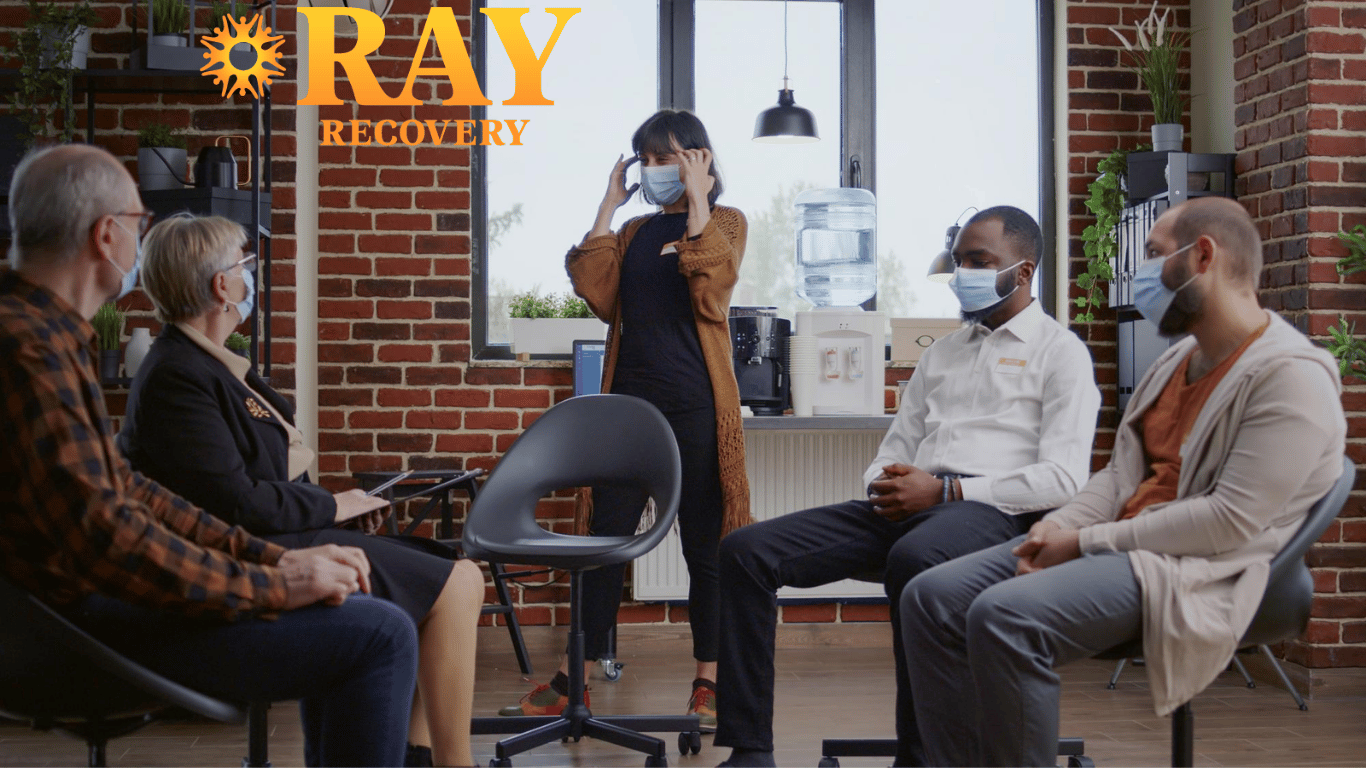
Our clinical team is trauma-informed and trained specifically to work with clients whose addiction is closely tied to trauma, including combat-related trauma for Veterans, and past abuse or loss for clients across our programs. Every EMDR treatment plan starts with a full assessment, so the work is built around your actual history rather than a generic protocol.
How to Prepare for Your First EMDR Session
If you’ve never done EMDR before, walking in without knowing what to expect can add unnecessary anxiety to an already vulnerable process. A few things that genuinely help:
Get enough rest beforehand. EMDR sessions can bring up real emotional intensity, and being well-rested makes it easier to stay grounded during and after the work.
Plan for some downtime afterward. Processing can leave you feeling drained or reflective. Avoid scheduling anything demanding right after a session if you can help it, especially early on.
Be honest with your therapist about what feels manageable. EMDR works best when the pace matches your actual readiness. If something feels like too much, saying so isn’t a setback, it’s part of how the process is supposed to work.
Don’t expect one session to resolve everything. Because EMDR works through distinct memories one at a time, meaningful change usually builds gradually across several sessions rather than in a single breakthrough moment.
At Ray Recovery, your first EMDR session is entirely about preparation and building trust, not diving straight into difficult memories. That groundwork matters just as much as the reprocessing work that comes later.
EMDR vs. Traditional Talk Therapy for Trauma
A common question clients ask is how EMDR actually differs from something like standard trauma-focused CBT. Both are evidence-based and often used together, but they work somewhat differently.
| EMDR | Traditional Talk Therapy | |
|---|---|---|
| Requires detailed verbal retelling | Minimal, memory is held in mind rather than narrated aloud | Often central to the process |
| Mechanism | Bilateral stimulation reprocesses the memory | Cognitive reframing through discussion |
| Typical session count | Often 6-12 sessions | Can vary widely, sometimes longer |
| Best suited for | Specific traumatic memories driving current symptoms | Broader patterns of thought and behavior |
Neither approach is universally “better,” and a lot of treatment plans use both together, addressing specific traumatic memories through EMDR while building longer-term coping skills through therapies like CBT.
Frequently Asked Questions
Does EMDR really work for addiction, or just PTSD? EMDR was originally developed for PTSD, but a growing body of research supports its use in addiction treatment specifically, particularly for reducing cravings tied to unresolved trauma. It works best as part of a full treatment plan rather than as a standalone addiction treatment.
Is EMDR painful or retraumatizing? EMDR can bring up real emotional intensity, since it involves working directly with distressing memories, but it’s designed to be safer and less overwhelming than repeatedly narrating trauma in detail. Your therapist paces the work based on your readiness, not a fixed schedule.
How many EMDR sessions will I need? Most people go through 6 to 12 sessions, though this varies depending on the complexity of your history and how you respond to treatment. Some people need fewer sessions, others need more, there’s no universal number.
Can EMDR be combined with other therapies? Yes. EMDR is commonly integrated with CBT, dual diagnosis treatment, and group therapy rather than used in isolation. Most treatment plans at Ray Recovery combine EMDR with other evidence-based approaches based on individual need.
Is EMDR covered by insurance? In most cases, yes, when it’s part of a broader treatment program. Our team can verify your specific insurance benefits before treatment starts.
Do I have to talk about my trauma in detail for EMDR to work? No. One of the defining features of EMDR is that it doesn’t require you to verbally recount every detail of what happened. You hold the memory in mind while your therapist guides the reprocessing, which is part of why many clients find it more manageable than traditional talk therapy for trauma.
Start EMDR Therapy at Ray Recovery
If cravings or relapse keep circling back to something that feels bigger than the addiction itself, EMDR might be the piece that’s been missing. Our team in Hudson, Ohio can help you figure out whether EMDR fits into your treatment plan, whether you’re starting fresh or already in one of our programs. Call us at 888.839.2606 or contact us online to learn more.