
Quick answer: Military service, particularly combat exposure, significantly increases the risk of substance use disorder, largely through its connection to PTSD, chronic pain from service-related injuries, and the stress of returning to civilian life. Veterans with heavy combat exposure face 61% higher odds of developing alcohol-related problems, and PTSD increases substance abuse risk by roughly 340%. Effective treatment for veterans needs to address the trauma and the substance use together, not one after the other.
If you’re a veteran struggling with drinking or drug use, or you’re a family member trying to understand why, you’re dealing with something well-documented and well-understood, not something unusual or shameful. Here’s what the research actually shows, and what treatment that accounts for military-specific factors actually looks like.
How Common Is Substance Use Among Veterans?
Quick answer: Substance use disorder affects veterans at meaningfully higher rates than the general population, particularly among those with combat exposure, and the large majority go untreated.

The numbers, pulled from multiple independent sources, tell a consistent story:
- Veterans with heavy combat exposure face 61% higher odds of developing alcohol-related problems compared to those without that exposure
- 65% of veterans entering a treatment program report alcohol as their most frequently misused substance, almost double the rate seen in the general population
- Roughly 11% of veterans visiting a VA healthcare facility for the first time have a diagnosed substance use disorder
- Veterans from Iraq and Afghanistan show a 13.2% substance abuse rate, nearly double the civilian rate for a comparable age group
- Despite this need, only about 28-30% of veterans with a substance use disorder receive treatment in a given year
- 96% of veterans with a substance use disorder report perceiving no need for treatment, a significant barrier that has nothing to do with treatment availability and everything to do with recognition and stigma
That last statistic matters as much as any of the others. The gap between how many veterans need help and how many recognize that need is often larger than the gap in access to care itself.
Why Military Service Increases the Risk
Quick answer: The connection runs primarily through PTSD, chronic pain from service-related injuries, military culture around alcohol, and the difficulty of reintegrating into civilian life.
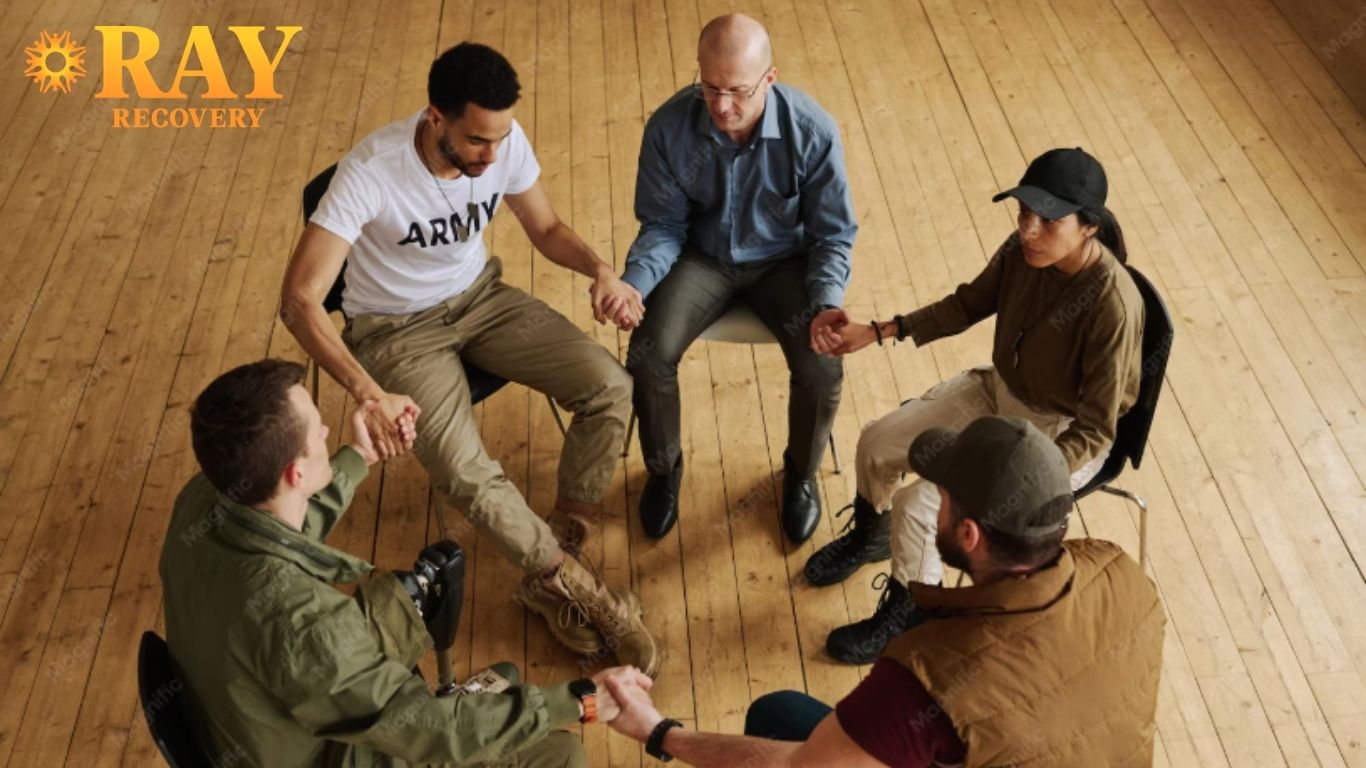
PTSD Is the Strongest Single Driver
PTSD and substance use disorder feed each other in a well-documented cycle. Veterans with PTSD are roughly 3.4 times more likely to develop a substance use disorder than veterans without trauma symptoms, and among veterans who served in high-intensity conflict zones, 63% of those with a substance use disorder also carry a PTSD diagnosis. The mechanism is straightforward even if the experience isn’t: alcohol and drugs numb hyperarousal, intrusive memories, and sleep disruption in the short term, which reinforces the pattern even as it makes the underlying trauma harder to actually process and heal.
Chronic Pain and Prescription Opioids
Roughly 25% of veterans with substance use issues report using specifically to manage chronic pain from service-related injuries. Veterans are also more likely to misuse specific prescription opioids like hydrocodone, often because a legitimate prescription for a real service injury became the starting point for dependence, not a decision to misuse anything. This mirrors a pattern that’s well documented more broadly (the same prescription-to-dependence pathway is common outside the veteran population too), but service-related injuries mean veterans encounter this starting point more often than civilians do.
Military Culture Around Alcohol
Drinking is woven into military social culture in ways that don’t automatically disappear after separation. Roughly 20% of active-duty service members report binge drinking at least once a week, a habit that, for many, continues or intensifies after leaving service, especially without the built-in structure and accountability that active duty provided.
The Difficulty of Reintegration
Problematic anger, a symptom that often accompanies both PTSD and substance use, increases from 15.9% in active-duty personnel before separation to 31.2% in the months after leaving service. Reintegration brings a loss of structure, purpose, and the tight peer bonds formed during service, all at once, and substance use sometimes fills the resulting gap before someone finds healthier ways to do so.
Why Veterans Often Don’t Seek Treatment
Quick answer: Stigma, a strong self-reliance identity, and a genuine perception gap about needing help are the biggest barriers, not access to care.
The statistic worth sitting with here is that 96% of veterans with a diagnosed substance use disorder don’t perceive a need for treatment. This isn’t denial in the dismissive sense, it often reflects a military culture that prizes self-sufficiency and can frame asking for help as a weakness rather than a reasonable response to a real problem. Family members are frequently the ones who recognize the pattern well before the veteran does, which is exactly why this piece is written for both audiences.
The Suicide Risk That Makes Early Treatment Urgent
Quick answer: Substance use disorder combined with PTSD significantly raises suicide risk among veterans, which is part of why treating both conditions together, and treating them early, matters more than it might for other populations.
Veterans represented over 20% of all suicides in a recent reporting year, and an average of roughly 20 veterans die by suicide each day in the United States. The suicide rate for veterans has been measured at around 1.5 times higher than for non-veterans. Problematic anger, which is strongly associated with both PTSD and substance use disorder, correlates with financial difficulty and unemployment, compounding factors that can deepen the crisis further. This isn’t included here to alarm, it’s included because it’s part of why waiting to address a substance use problem “until things get bad enough” carries real risk that’s higher for veterans than for the general population, and why reaching out earlier rather than later matters as much as it does.
If you or a veteran you know is currently having thoughts of suicide, the Veterans Crisis Line is available 24/7 by calling or texting 988 and pressing 1, or by texting 838255.
How Substance Use Patterns Differ by Service Era and Gender
Quick answer: Substance use patterns vary meaningfully depending on when and how someone served, and treatment that accounts for this tends to fit better than a one-size-fits-all approach.
Iraq and Afghanistan-era veterans show notably higher rates of substance use disorder than veterans from earlier eras, largely tied to the intensity and frequency of deployments during those conflicts. Homeless veterans show a substance use disorder rate roughly four times higher than housed veterans, a reminder that substance use, housing instability, and untreated mental health conditions frequently compound one another rather than existing as separate problems. Women veterans also face distinct risk factors, including higher rates of trauma related to military sexual trauma alongside combat-related PTSD, which can shape both the substance use pattern and what feels like a safe treatment environment. None of this means treatment needs to be radically different by category, but it does mean a real assessment accounts for these differences rather than assuming a single approach fits every veteran equally.
What Effective Treatment for Veterans Actually Looks Like
Quick answer: Treatment needs to address trauma and substance use together, in one coordinated plan, rather than treating one and hoping the other resolves on its own.
Dual diagnosis care as the default, not the exception. Given how tightly PTSD and substance use disorder are linked for veterans, treating substance use in isolation tends to leave the underlying driver untouched, which is a major reason relapse rates run higher when trauma isn’t addressed directly. Our dual diagnosis program treats both conditions as one coordinated plan.
Trauma-focused therapy. Approaches that directly address combat trauma and its aftermath matter more here than generic talk therapy. Our trauma therapy program is built around this specifically, rather than treating trauma as a side note to the substance use treatment.
An honest look at chronic pain and medication. If service-related pain is part of the picture, a real treatment plan accounts for pain management alongside the substance use, rather than removing a medication without addressing what it was managing in the first place.
Peer connection with people who understand military culture. Veterans consistently respond better to treatment environments that don’t require them to explain military context from scratch. Group therapy that includes other veterans, or at minimum a team genuinely familiar with military culture, tends to build trust faster than a generic group setting.
A schedule that respects real life. Many veterans are working, in school through the GI Bill, or managing family responsibilities. Our intensive outpatient program and partial hospitalization program both offer structured care without requiring residential commitment.

What About VA Healthcare Versus Community Treatment?
Quick answer: Both are real, valid options, and they’re not mutually exclusive.
The VA Northeast Ohio Healthcare System operates a clinic in Akron offering substance use and mental health care, including dual diagnosis treatment, often at no cost to eligible veterans. This is a genuinely good resource, and if you’re eligible and it fits your situation, it’s worth knowing about directly.
At the same time, the VA’s Community Care Network exists specifically because VA facilities can’t always provide immediate access, the right specialty fit, or a convenient location for every veteran who needs care. Through the VA Community Care Network, eligible veterans can receive treatment at community providers like Ray Recovery with VA coverage, without giving up VA benefits or having to choose one system over the other permanently. We verify VA CCN benefits directly so you know exactly what’s covered before starting.
Frequently Asked Questions
Is it normal for a veteran to develop a drinking problem years after leaving the military?
Yes, this is common. Substance use patterns connected to military service often don’t peak immediately after separation. Delayed onset, sometimes years later, is a well-documented pattern, particularly when PTSD symptoms surface or worsen over time rather than immediately.
Does the VA Community Care Network actually cover treatment at a facility like Ray Recovery?
For eligible veterans, yes, when VA facilities can’t provide timely or appropriate care, community providers can be covered through VA CCN. Coverage specifics depend on individual eligibility, which is why we verify benefits directly rather than giving a blanket answer.
My family member is a veteran and won’t admit they need help. What can I do?
This is an extremely common situation given how many veterans don’t perceive a need for treatment even when one clearly exists. Approaching the conversation with specific observations rather than accusations, and offering to help research options rather than issuing ultimatums, tends to go further than confrontation. Our team can also talk through how to approach this conversation even before your loved one is ready.
Is PTSD treatment separate from substance use treatment, or can they happen together?
For veterans specifically, treating them together tends to produce far better outcomes than treating one and waiting to address the other. This is the entire premise behind dual diagnosis treatment, and it’s considered best practice in veteran-specific care specifically because the two conditions are so tightly linked.
Do I need a specific diagnosis before reaching out for help?
No. Many veterans reach out without a formal PTSD or substance use disorder diagnosis already in hand. A real assessment during intake is how that gets clarified, you don’t need to arrive with an answer already figured out.
Are Iraq and Afghanistan veterans really at higher risk than veterans from other eras?
Data shows notably higher substance use disorder rates among post-9/11 combat veterans compared to earlier eras, largely linked to deployment frequency and intensity during those conflicts. That said, veterans from any era can and do develop substance use disorders, and treatment approaches apply regardless of when someone served.
What if a veteran is also dealing with homelessness or housing instability alongside substance use?
This combination is unfortunately common, homeless veterans show substance use disorder rates roughly four times higher than housed veterans. Treatment planning in this situation needs to account for housing stability as part of the picture, not treat the substance use in isolation from that reality. This is worth raising directly during an assessment so the plan actually fits the full situation.
If You’re a Veteran Ready to Talk About Treatment
Whether you’re managing combat-related trauma, chronic pain from a service injury, or a drinking pattern that’s grown into something bigger than you expected, real treatment exists, and it can be built around your specific situation rather than a generic program. Our Veterans Rehab Program is built specifically around these factors, not treated as an afterthought within a general program.
Call 888.839.2606 or reach out online to talk with our team.