
- Medically Reviewed By: Dan Smith, LISW-S, LICDC
- Updated: November 23, 2026
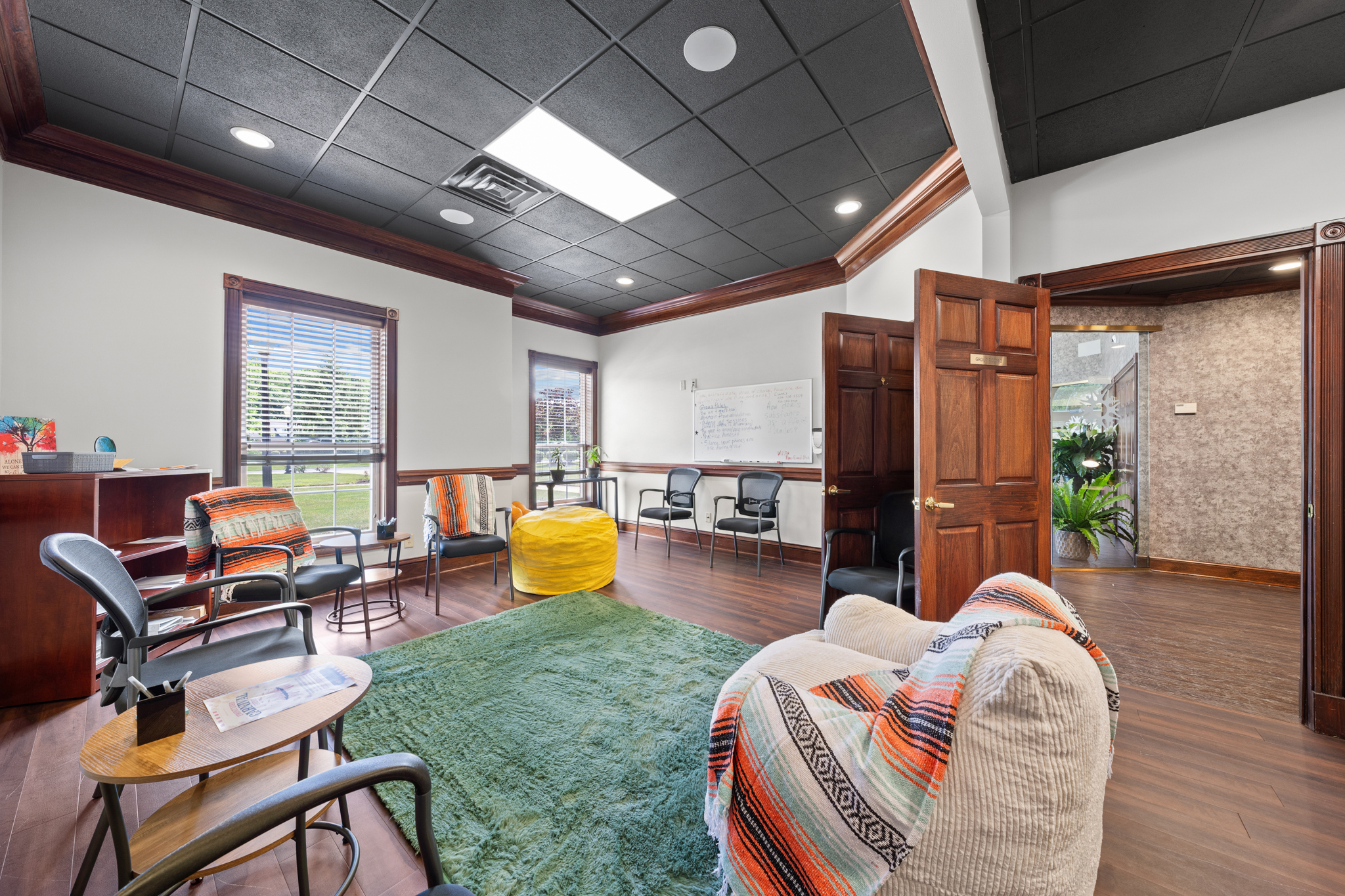
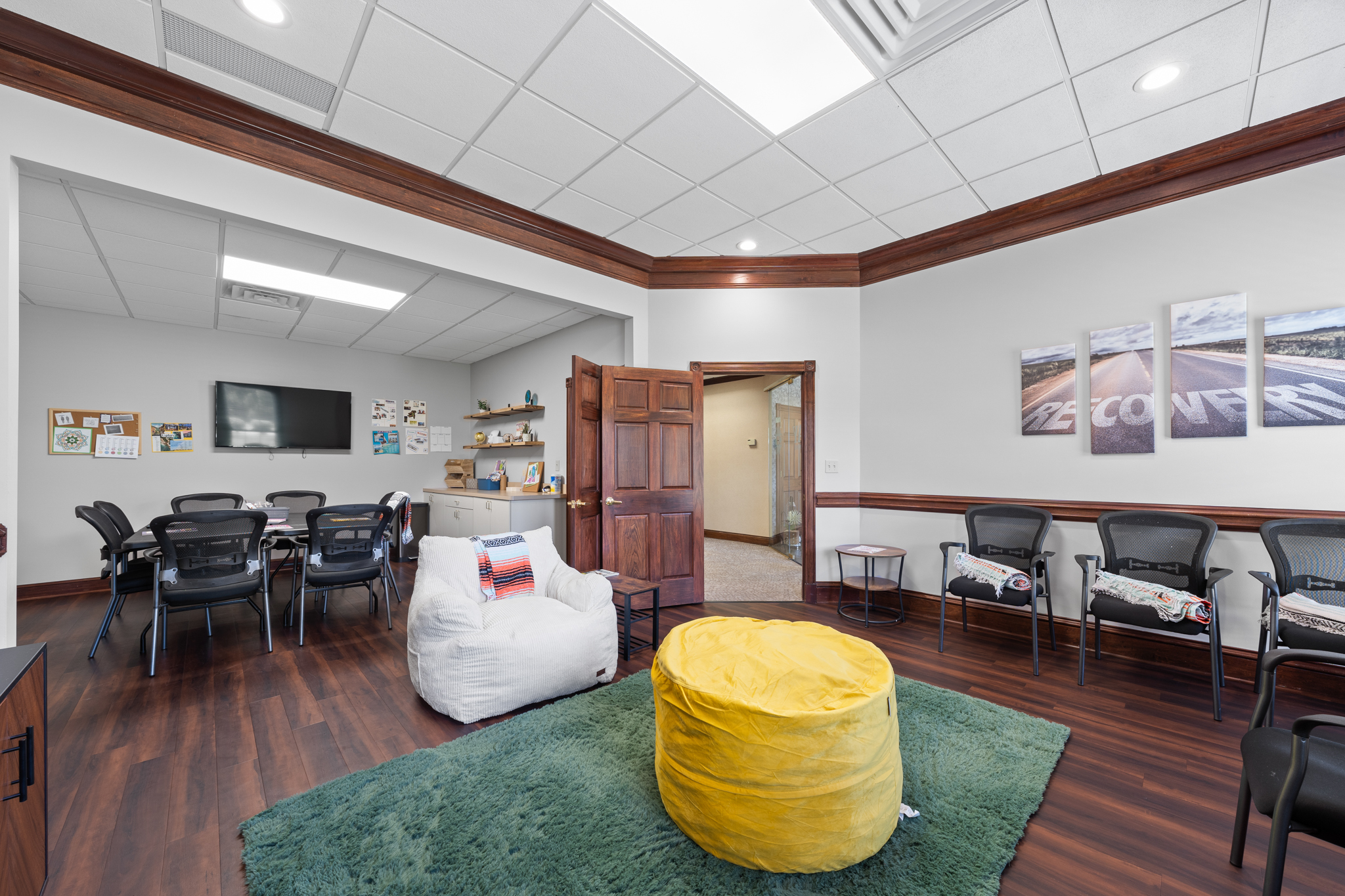
EMDR (eye movement desensitization and reprocessing) is a trauma therapy that helps painful memories lose their charge. At Ray Recovery, EMDR is part of outpatient addiction treatment for adults whose drug or alcohol use is tied to trauma or PTSD. It’s offered when appropriate in our PHP, IOP and virtual IOP, at our Hudson office near Akron and Uniontown office near Canton.
| EMDR treatment in Ohio at a glance | |
| What it is | A trauma-focused therapy that uses back-and-forth eye movements, sounds or taps while you hold a memory in mind |
| Who it’s for | Adults with trauma or PTSD alongside a drug or alcohol problem (adults only) |
| How it’s offered | Within PHP (about 25 hours a week, Monday to Friday), IOP (about 9 hours a week, daytime or evening) or virtual IOP anywhere in Ohio, when your clinician decides it fits |
| Locations and hours | Hudson (Akron and Summit County) and Uniontown (Canton and Stark County), 8 a.m. to 9 p.m. daily |
| Insurance | Ohio Medicaid, MyCare Ohio, Tricare, VA CCN, CareSource, Medical Mutual and more |
| Accreditation | Accredited by the Joint Commission and licensed by the Ohio Department of Mental Health and Addiction Services |







What Is EMDR Therapy and How Does It Work?
According to the VA National Center for PTSD, EMDR is a therapy for PTSD in which you focus on processing your memory of the trauma. While you call the memory to mind, you follow a back-and-forth movement or sound for about 30 seconds at a time, then talk about what you noticed. In most cases you won’t be asked to describe the details of what happened, and there’s no homework between sessions. The VA calls EMDR one of the most effective types of treatment for PTSD, and the World Health Organization recommends it be considered for people with PTSD.
The 8 Phases of EMDR
Cleveland Clinic describes EMDR in eight phases:
- History and information gathering: your clinician learns your story and what you want to work on.
- Preparation: you learn how EMDR works and practice calming skills first.
- Assessment: you pick a target memory and rate how disturbing it feels.
- Desensitization and reprocessing: sets of eye movements, sounds or taps while you hold the memory in mind.
- Installation: strengthening a more helpful belief about yourself.
- Body scan: noticing any tension left in your body.
- Closure: making sure you leave the session settled.
- Reevaluation: checking progress at the next session.
Our article on how EMDR works for addiction goes deeper.
What Does an EMDR Session Feel Like?
Your first EMDR sessions are about preparation and trust, not diving straight into difficult memories. You’ll practice grounding skills you can use if feelings get strong. When reprocessing starts, each set lasts about 30 seconds, then your clinician asks what came up. You’ll rate how upsetting the memory feels on a 0 to 10 scale. In EMDR that’s called the SUD scale, which stands for Subjective Units of Disturbance (not substance use disorder), and the goal is for that number to come down over time.
The VA notes that you may feel uncomfortable while focusing on trauma-related memories, and Cleveland Clinic says the most common side effect is unpleasant thoughts or feelings between sessions. A few practical tips help:
- Plan a quiet hour after your session instead of jumping back into a busy day.
- Tell your counselor if cravings spike during trauma work. That’s useful information, not a failure.
- Lean on your group and your support people between sessions.
Is EMDR Safe in Early Recovery, or Do I Need to Be Sober First?
You don’t have to wait. The VA says people with PTSD and a substance use disorder can safely engage in and benefit from trauma-focused therapy, and that EMDR should be accessible to Veterans with both conditions. A 2025 randomized trial of 209 people with both conditions found that adding EMDR to addiction treatment reduced PTSD severity and did not appear to increase substance use. A 2026 follow-up of the same trial found that treating PTSD and addiction at the same time worked better at 3 months than waiting, and concluded that delaying PTSD treatment until after addiction treatment is not necessary.
Your clinician still checks that you’re ready. If you’re in withdrawal, using heavily or in crisis, getting stable comes first. We don’t provide detox, but we can help connect you with a detox provider and continue your care in our PHP or IOP. If you’re in crisis, call or text 988 to reach the 988 Suicide & Crisis Lifeline.
Words From Our Clients

Penny K.

I went to Ray Recovery and wanted to leave the next day but the staff there made me feel so comfortable and not judged they helped me threw getting custody of my kids back they were there with me threw my husband passing away while I was there I decided to stay and that was the best decision I ever made they told me to give it a try for 48 hours if I wanna leave they wont try to stop me so they 48 hours gave me 251 days of soberity and have custody of my kids and made it off probation thank u to everyone at ray recovery for helping me and caring enough to save my life and gain the family back I would not change none of this


Ethan C.
Ray recovery has changed my entire perspective on my life and on my recovery I love the staff here I love being around like minded people who push you and motivate you to be the best person you possibly can be

Adam T.
This place is truly amazing. Everything from the way it's structured to the staff and housing managers.

Tom T.
Writing ⭐⭐⭐⭐⭐ Outstanding Experience at RAY Recovery! I can't say enough good things about RAY Recovery. The staff are absolutely amazing, caring, respectful, and supportive. They genuinely care about the people they work with and go above and beyond to help everyone succeed in their recovery journey. The sober living environment is clean, comfortable, and welcoming. It provides a safe, structured, and positive place to focus on recovery, build confidence, develop healthy habits, and get life back on track. I'm truly grateful for the staff, the support, and the opportunities RAY Recovery provides. Having people who believe in you and want to see you succeed makes all the difference. I highly recommend RAY Recovery to anyone looking for a fresh start and a real chance at a better life. Thank you to the entire team for everything you do. Keep changing lives, one person at a time! 🙏💯

Eric L.
They are very accommodating people they bend over backwards for you any needs that you have if it's in there willpower they will do it.

Shawn A.
Ray Recovery has given me strength and balance in my life. This program really works if you work it. The tools are provided by a wonderful staff who actually care. This place helped me become a better me. Thank You Ray Recovery

Shane M.
This amazing place showed me a new way to live .. abstinent free of all drugs and alcohol...And it wasn't just the PHP and IOP classes, it was the incredible staff in Housing and the awesome guys I have the privilege to call my brother's. Thank you doesn't nearly come close to my appreciation and my gratitude for this recovery center and all those who are involved!

Luke M.
I have been to many other facilities in other states but this has been a good experience for me. They gave me the tools and peace of mind and let me run with it! I recommend this program to anyone who is willing to give sobriety a try and turn their life around!

Angela L.
I am a current client in the IOP women’s program and if it were not for a certain staff member coming and rescuing me off of the streets of Akron I would be dead right now. This place has given me a reason to wake up every day and want to fight this battle of addiction that I’ve been suffering with since I was 15 years old. I’ve never felt more loved and wanted by staff members ever in my life and I’ve been to a lot of different treatment centers in my 41 years. The opportunities for growth and development this place has given me can not be measured. I have never before been able to look in the mirror and honestly say that I love myself. Today I can look in my eyes and see life, motivation and true inner beauty that has come from the women in this program loving me until I was able to love myself. I will never be able to express enough gratitude for what I’ve been given. Thank you God for sending these guardian angels to save my life on July 8,2026

Ilene C.
Ray recovery has very supportive for my recovery and knowledge to get back to Society in Sober Living .

Lisa
Ray's recovery has been an exceptional experience both clinical and housing provided me with a comfortable place to call home.

Heather F.
Raise recovery was a wonderful program it helped me from everything from housing to deep trauma issues I would recommend it to anybody it really is a wonderful place to be
Can EMDR Help With Addiction Itself?
EMDR treats the trauma that often drives substance use, but it isn’t a cure for addiction on its own. A 2025 review of 14 studies found moderate effects on craving, PTSD, depression and anxiety, but no significant effect on addiction severity, and noted that the studies were generally low quality. In a trial of outpatients with alcohol use disorder, adding EMDR to usual care didn’t change drinking. That’s why, at Ray Recovery, EMDR sits inside a full program with CBT, DBT, group therapy and, when it fits, medication-assisted treatment with Vivitrol.
EMDR vs. CPT vs. Prolonged Exposure: Which Trauma Therapy Fits?
The VA names three talk therapies that work best for PTSD. Here’s how they compare:
| EMDR | Cognitive processing therapy (CPT) | Prolonged exposure (PE) | |
|---|---|---|---|
| What you do | Hold a memory in mind during short sets of eye movements, sounds or taps | Learn to challenge unhelpful beliefs about the trauma | Gradually face trauma memories and reminders you’ve been avoiding |
| Typical length | About 3 months of weekly sessions (VA) | Trauma-focused talk therapies usually last about 8 to 16 sessions (VA) | |
| Offered at Ray Recovery? | Yes, when appropriate | Yes | Ask us |
Your clinician helps you choose. Learn more about our trauma therapy for addiction and our PTSD and addiction treatment.
How Is EMDR at Ray Recovery Different From Weekly EMDR With a Private Therapist?
Many EMDR therapists in private practice see clients weekly for trauma on its own. At Ray Recovery, EMDR happens inside a structured outpatient program, alongside group therapy, individual counseling, psychiatric support, family therapy and approaches like Seeking Safety, for people whose trauma and substance use feed each other. If you don’t have a drug or alcohol problem, a private EMDR therapist is likely the better fit, and EMDRIA, the professional association for EMDR, lists therapists in its online directory.
What Should I Look for in an EMDR Therapist? (Trained vs. EMDRIA Certified)
EMDR should be provided by a licensed mental health clinician who has completed EMDR training. If you’re looking for a certified EMDR therapist, “EMDRIA certified” is an additional credential from EMDRIA that shows advanced experience beyond basic training. Whoever you see, ask how they were trained, how they’ll prepare you before memory work, and how they handle cravings or strong emotions during trauma work. At Ray Recovery, EMDR is provided when appropriate by our licensed clinicians as part of your treatment plan.
Where Can I Get EMDR Therapy Near Akron or Canton?
If you’re searching for EMDR therapy near me and you also want help with drinking or drug use, we have two offices. For EMDR therapy in Akron and Summit County, our Hudson office at 1737 Georgetown Rd, Suite H/I, Hudson, OH 44236 is about 20 minutes from downtown Akron. For EMDR therapy in Canton, Ohio and Stark County, our Uniontown office is at 13680 Cleveland Ave NW, Uniontown, OH 44685, close to Canton and North Canton. Both offices run the same programs, and virtual IOP reaches adults anywhere in Ohio. Veterans can also ask about our veterans program.
Does Insurance Cover EMDR Therapy?
EMDR treatment in Ohio is usually covered when it’s part of a covered outpatient program. Ray Recovery is in-network with Ohio Medicaid, Humana Medicaid, Tricare, VA Community Care Network, CareSource and Medical Mutual, and accepts dual Medicaid-Medicare (MyCare Ohio) plans. Medicare-only plans are not accepted. We verify your benefits for free before you start.
How Do You Start?
- A confidential call. Your first call is a consultation and assessment with our admissions team.
- A short assessment of your substance use, trauma history and safety, to find the right level of care.
- A free benefits check, so you know your costs before you commit.
- Your start date. Most people start within a few days. EMDR begins when your clinician decides you’re ready.
Frequently Asked Questions
How many EMDR sessions will I need?
It varies. The VA describes about 3 months of weekly 50- to 90-minute sessions, and Cleveland Clinic says a single disturbing memory often takes three to six sessions, with more for complex trauma. In our programs, the pace follows your treatment plan.
Do I have to be sober before starting EMDR?
No. The VA says people with PTSD and a substance use disorder can safely take part in trauma-focused therapy, and a 2026 trial found that delaying PTSD treatment until after addiction treatment is not necessary. Your clinician still checks that you’re stable and ready.
Can I do EMDR online in Ohio?
EMDR can be part of our virtual IOP when appropriate, for adults anywhere in Ohio. We don’t offer standalone online EMDR sessions outside of our programs.
Who should not start EMDR right away?
People in withdrawal, using heavily, in crisis or not safe at home usually need to stabilize first. Your clinician assesses this at intake so EMDR starts at the right point in your treatment.
Are your EMDR therapists certified?
EMDR at Ray Recovery is provided when appropriate by our licensed clinicians as part of your treatment plan. EMDRIA certification is a separate advanced credential; you’re welcome to ask about any clinician’s training when you call.
Does Ohio Medicaid cover EMDR?
EMDR is covered as part of our outpatient programs for most plans, including Ohio Medicaid, Humana Medicaid, Tricare, VA Community Care Network, CareSource, Medical Mutual and MyCare Ohio. Medicare-only plans are not accepted. We verify your benefits for free.
Do you offer EMDR for teens?
No. Ray Recovery treats adults only.
Start EMDR and Addiction Treatment in Ohio
Trauma doesn’t have to keep driving your substance use. Call 888.598.6299 or reach out online to ask about EMDR treatment in Ohio at Ray Recovery. Calls are confidential, and most people start within a few days. For survivors of abuse, our article on domestic abuse, PTSD and addiction may also help.
Take the First Step Toward Healing: Contact Ray Recovery Now
"*" indicates required fields